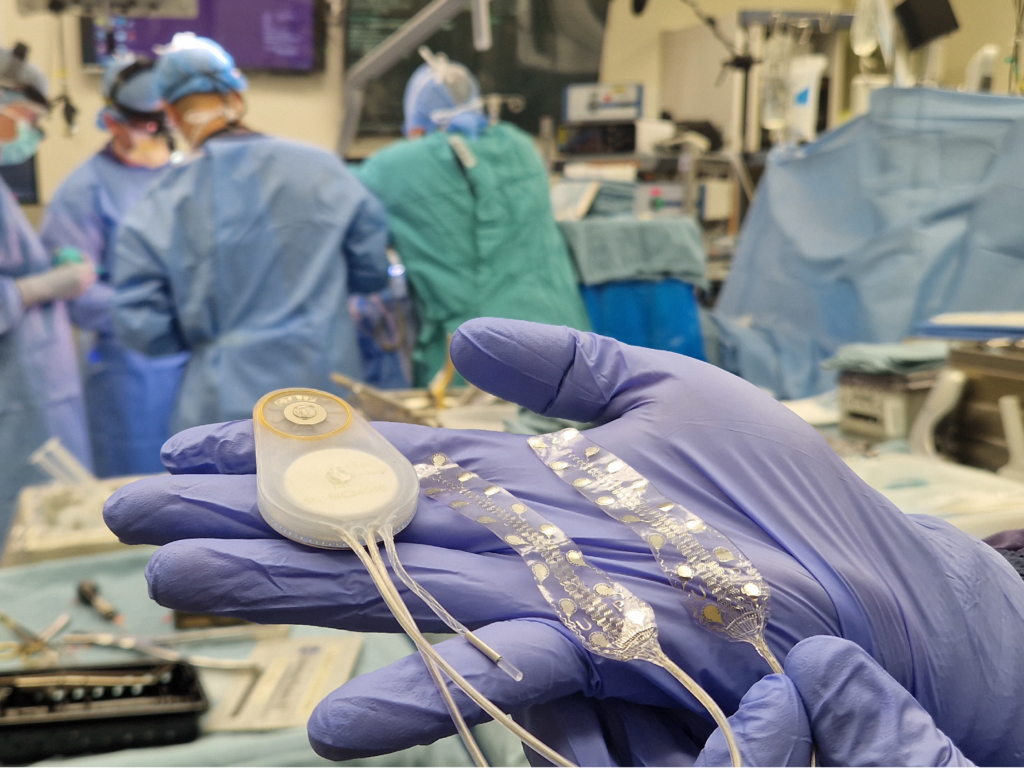
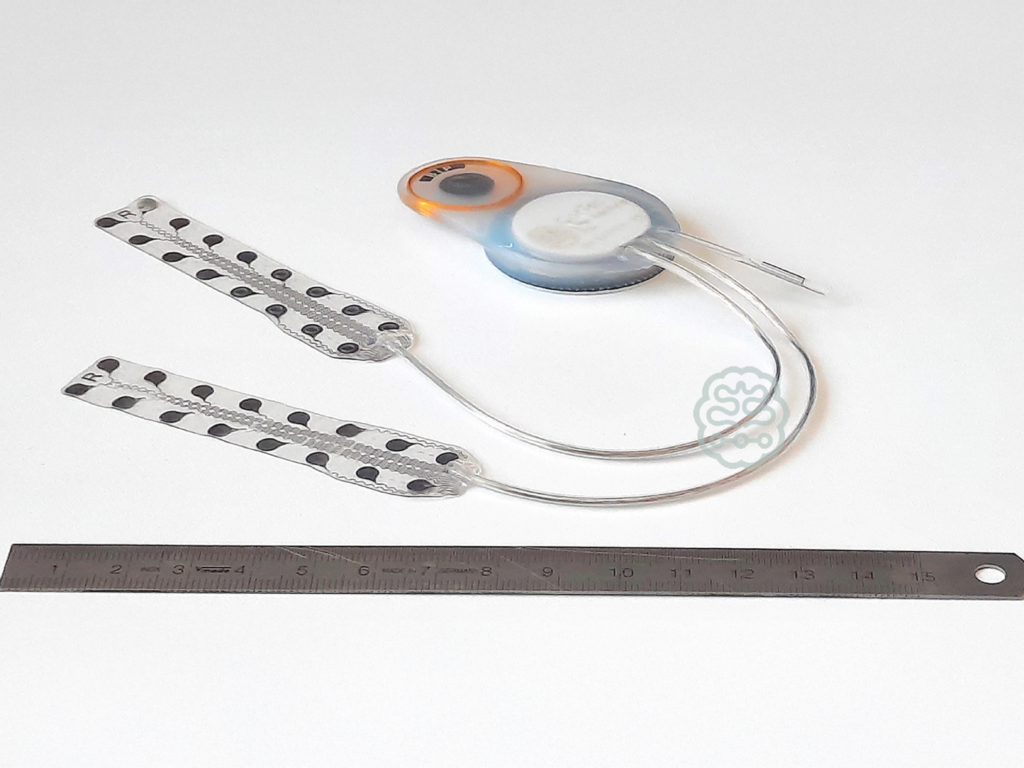
The Brain Interchange System is an investigational device and is not approved for commercial use. CAUTION: Investigational device. Limited by Federal (or United States) law to investigational use.

Clinical Pathway

Clinical Application & Ongoing Projects

Lead Indication - Stroke Rehabilitation


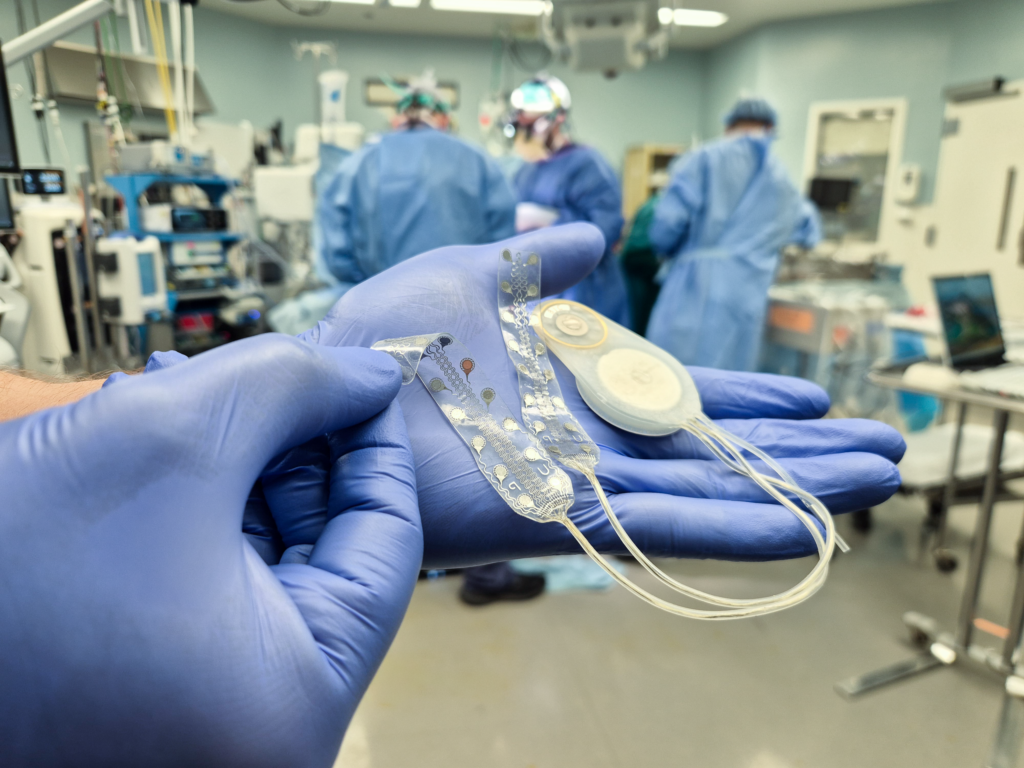
Brain Interchange™ is designed to restore movement after neurological injury by creating a direct communication channel between the brain and external rehabilitation technologies. In stroke survivors, motor intention signals can be decoded and transformed into functional actions, such as muscle activation or control of assistive devices, supporting intensive, task‑oriented rehabilitation.

The goal: to enable more effective, personalized recovery for individuals living with motor impairments after stroke.

The Brain Interchange System is an investigational device and is not approved for commercial use. CAUTION: Investigational device. Limited by Federal (or United States) law to investigational use.

Stronger Motor Recovery in 6 Weeks Than in the Entire Previous Year

Observed in first study participant. Investigational device.

Therapeutic Effect Persists After Stimulation Stops

Observed in first study participant. Investigational device.

Stable Wireless Operation for 6+ Months

Observed in first study participant. Investigational device.

CorTec Receives FDA Breakthrough Device Designation for Its Brain Interchange System in Stroke Rehabilitation — the First BCI Worldwide Designated for Stroke Motor Rehabilitation

The U.S. Food and Drug Administration (FDA) has granted Breakthrough Device Designation for CorTec’s Brain Interchange™ system. The designation covers the use of direct cortical electrical stimulation to support motor recovery in people living with chronic stroke-related impairments.

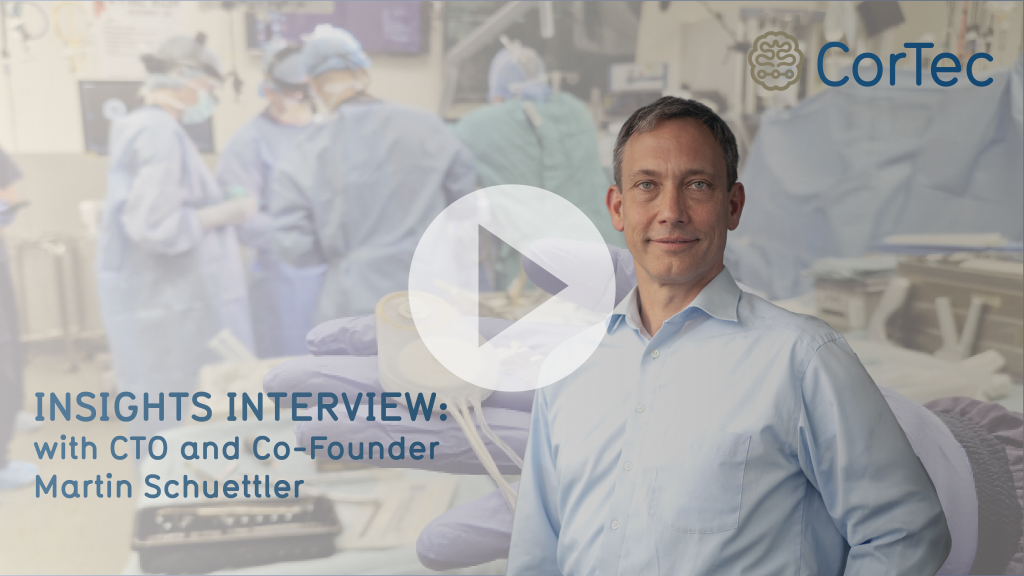
Insights Interview: First Human Implantations of the Brain Interchange

CTO Martin Schuettler explains the technology and clinical progress behind the first two human implantations of the Brain Interchange system, performed at Harborview Medical Center in Seattle as part of an NIH-funded, FDA-approved IDE Study. He reflects on what the early results mean for stroke rehabilitation and the road ahead.

CorTec Announces Successful Second Human Implantation of Its Brain-Computer Interface (BCI) System

In February 2026, a second patient at Harborview Medical Center in Seattle successfully received the Brain Interchange™ implant as part of an NIH-funded, FDA-approved trial led by researchers from the University of Washington and UCLA. Building on encouraging results from the first participant, the study continues to advance CorTec’s clinical program for stroke recovery.

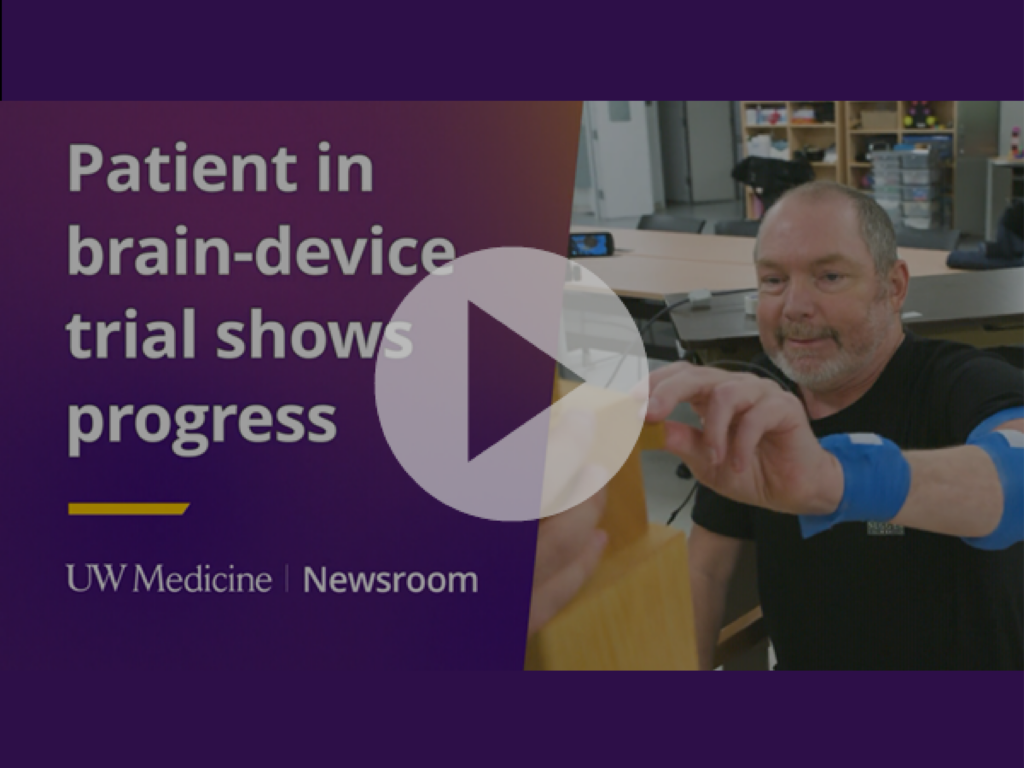
"This therapy literally brought me back from the dead"

In December 2025, the University of Washington shared the story of Matt Kidd, a stroke patient who regained motor function as part of a clinical trial using a brain implant developed in collaboration with CorTec. After years of therapy with little progress, targeted electrical stimulation helped his nerve cells reconnect and within weeks he was able to perform everyday movements again.

CorTec Announces Neurotech Milestone: First Human Implantation of a Brain-Computer Interface made in Germany

In July 2025, CorTec achieved a historic milestone with the first-ever human implantation of a fully implantable, German-developed Brain-Computer Interface system, performed at Harborview Medical Center in Seattle. As part of an FDA-approved trial led by researchers from the University of Washington and UCLA, the study targets motor recovery in stroke patients and marks a major step forward in neurorehabilitation.

CorTec Receives FDA Approval for First-in-Human Implantation of the Brain Interchange™ System

In October 2024, CorTec received both FDA Investigational Device Exemption and IRB approval from the University of Washington, clearing the path for the first-ever human implantation of a fully implantable, German-developed Brain-Computer Interface system. The study, conducted in collaboration with researchers from the University of Washington and UCLA, targets motor recovery in stroke patients with arm paralysis.

Epilepsy

Brain Interchange™ has the potential to support future closed‑loop approaches for epilepsy. By sensing neural activity in real time, the system could detect the onset of abnormal patterns and deliver targeted stimulation to help interrupt seizure progression. Such adaptive neuromodulation strategies aim to complement existing therapies and offer more precise control for patients with drug‑resistant epilepsy.

Mayo Clinic collaboration

Led by Prof. Nuri Ince and Prof. Gregory Worrell.

Depression

Next‑generation neuromodulation concepts for treatment‑resistant depression focus on personalized, circuit‑level interventions. Brain Interchange™ may enable future applications in which neural biomarkers of mood state are measured continuously and stimulation is automatically adapted to the individual’s needs. This closed‑loop approach could support more consistent and effective modulation of mood‑relevant networks.

University Clinic of Freiburg

First-in-Human study in planning 

Future Applications

Beyond stroke rehabilitation, Brain Interchange™ provides a platform for future closed‑loop neuromodulation therapies. Its ability to sense and stimulate neural activity in real time opens pathways toward innovative treatments in epilepsy, depression and opens up new options for BCI communication.

We work directly with clinicians and researchers to co-design each BCI system. Your specific indication, patient population, and therapeutic protocol determine the exact configuration, from electrode placement to stimulation algorithms.